
Clearer-looking skin starts with a considered plan, not a preset treatment. If you’re looking for a laser clinic in Birmingham, first identify the concern you want to address, such as pigmentation, uneven tone or texture. A consultation can help determine whether a laser treatment is suitable and what result may be realistic.
It’s natural to want a treatment that feels personal and carefully considered. Similar-looking skin concerns can have different causes, so the consultation matters. A practitioner should discuss your priorities, assess the area and explain which options may suit your goals.
This article explains how a consultation can guide your treatment choice, what laser treatments may address and what to consider when choosing a laser clinic. You’ll learn how personalised planning works and how to compare options against your skin goals.
Key Takeaways
- A consultation helps identify your skin concerns and shape a treatment plan around your priorities and skin.
- Pigmentation, uneven tone and texture are distinct concerns, so the treatment approach depends on what you want to address.
- Cosmetic treatments and medical dermatology serve different purposes; persistent or concerning skin changes need medical assessment.
- Learn what laser and related aesthetic treatments may involve, and how personalised options can support your skin goals.
Consultation and personalised treatment planning
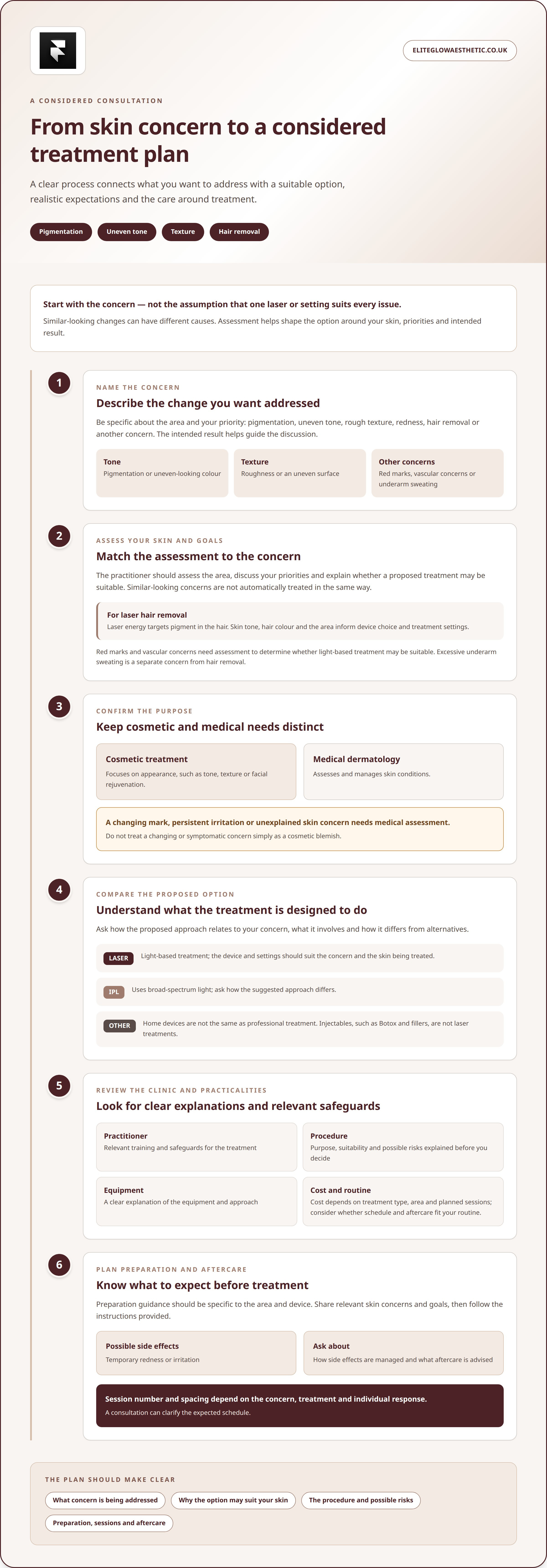
A consultation connects your concern with a suitable treatment plan. It should cover your skin, goals, preparation, aftercare and likely session schedule.
Treatment options by concern
Start with the concern rather than assuming one laser treats every issue. Red marks and vascular concerns need assessment to determine whether light-based treatment may be suitable. Some laser resurfacing procedures may use numbing cream before treatment. Excessive underarm sweating is different from hair removal, so raise it as a separate concern. Cosmetic treatments may focus on tone, texture or facial appearance.
Choosing a reputable laser clinic
When choosing a laser clinic in Birmingham, consider how clearly it explains the proposed treatment, practitioner training, equipment and aftercare. A thorough consultation should outline the procedure’s purpose and possible risks before you decide. You can also ask how the approach differs from IPL, which uses broad-spectrum light, and home devices, which are not the same as professional treatment.
Qualification and regulatory requirements depend on the procedure and location. The clinic should explain the practitioner’s relevant training and the safeguards used for the treatment. The cost depends on the treatment type, area and planned sessions, and is provided after a quote request. Before booking, consider whether the schedule and aftercare fit your routine in Birmingham.
Preparing for treatment and understanding risks
Before hair removal or skin treatment, the practitioner should give preparation guidance specific to the area and device. Share relevant skin concerns and treatment goals, then follow the instructions provided. Possible side effects include temporary redness or irritation; ask how these are managed and what aftercare is advised.
The number and spacing of sessions depend on the concern, treatment and individual response. A consultation can clarify the expected schedule. To compare laser clinics in Birmingham, look for clear explanations of suitability, practitioner training and each step of the treatment.
Skin tone, pigmentation and texture refinement
Pigmentation, uneven tone and rough texture can look similar, but they are distinct concerns. A treatment plan should begin by identifying the visible change and the result you want. For example, a flat brown patch calls for a different assessment from redness or an uneven facial surface. The device and settings must suit both the concern and the skin being treated.
Laser hair removal also requires careful consideration of skin tone. Laser energy targets pigment in the hair, so the contrast between hair and surrounding skin informs device choice and treatment settings. A practitioner should assess skin tone, hair colour and the area before planning sessions. This supports a considered approach for different skin tones, rather than using one setting for everyone.
Medical dermatology and cosmetic treatments have different aims. Medical dermatology assesses and manages skin conditions; cosmetic treatment focuses on appearance, such as tone, texture or facial rejuvenation. A changing or symptomatic skin concern needs medical assessment rather than treatment as a cosmetic blemish. Keeping these purposes distinct helps direct each concern appropriately.
Botox and fillers are injectables, not laser treatments. They address different aesthetic concerns and should not be confused with laser-based skin refinement. Skin tightening and tissue lifting are also distinct goals. A treatment discussion should explain what the proposed approach is designed to address, without implying that improved surface texture automatically lifts tissue.
For a cosmetic focus, a carbon laser peel may be considered as part of an aesthetic plan. The practitioner should explain how it relates to your concern and what the treatment involves. This keeps expectations centred on your chosen goal, whether that is smoother-looking texture or a more even-looking tone. Explore carbon laser peel treatment as one option to discuss.
Dr. Arielle Kauvar is Clinical Professor of Dermatology at New York University Grossman School of Medicine. When considering pigmentation or texture refinement, describe the change you want addressed and ask how the proposed treatment relates to it. Ask the practitioner to clarify the treatment’s focus, its approach for your skin tone, and whether the goal is surface refinement or another aesthetic result. A clear explanation helps keep the plan aligned with your priorities and avoids treating different concerns as interchangeable.
Medical and cosmetic dermatology
Medical dermatology and cosmetic procedures serve different purposes. Medical care assesses skin conditions, while cosmetic treatments focus on appearance, such as tone, texture or facial rejuvenation. A changing mark, persistent irritation or unexplained skin concern calls for medical assessment, not simply a beauty treatment. Keeping these aims distinct helps ensure the next step addresses the concern itself.
Cosmetic treatment planning starts with a defined goal. Someone seeking smoother-looking texture, for example, may need a different discussion from someone concerned about facial volume. Laser procedures, skin treatments and injectables are not interchangeable: fillers add volume, while laser treatments use light-based technology. A tailored consultation should clarify the procedure, its purpose and whether it aligns with the outcome you want.
Natural beauty doesn’t mean one fixed result or treatment. A useful consultation considers the area of concern, the change you want and the options available within cosmetic care. Ask for a clear explanation of what a proposed procedure is designed to address. This helps distinguish treatment for surface appearance from medical care for a skin condition.
Regulation can differ across the UK. The Scottish Government’s proposed scheme would allow non-ablative laser hair removal and laser tattoo removal to be undertaken under a licence. That proposal concerns Scotland, not Birmingham, so it should not be treated as the rule for an English clinic. For a Birmingham treatment, ask how the practitioner’s training and process relate to the procedure being considered. Clear distinctions support informed decisions, whether the aim is cosmetic refinement or medical assessment.
Clinical expertise matters when a concern may need medical assessment rather than an appearance-focused procedure. Dr. Arielle Kauvar is a board-certified dermatologist. A consultation can clarify whether a red mark is the concern and what treatment is being considered, while keeping the discussion focused on your goal and the limits of cosmetic care.
Most patients receiving laser treatment for red marks at Mount Sinai need two or three treatments for best results. This is a point of reference, not a guaranteed outcome for everyone. Before deciding whether to proceed, ask what course may suit your concern, what result is realistic and how progress will be assessed.
What services do laser clinics offer in the UK?
UK providers may offer treatments for hair reduction and selected skin concerns. Hair-removal appointments target chosen areas, such as underarms or legs, while skin-focused procedures may address pigmentation, redness or uneven texture. The proposed method depends on the concern, skin and hair characteristics, and treatment goals.
A laser clinic may also offer skin resurfacing or peels as part of cosmetic care. A carbon laser peel, for example, differs from hair removal in its purpose and process. During a consultation, ask what the treatment aims to address and what the appointment involves.
The treatment name alone doesn’t explain the full process. Ask how the proposed method relates to your concern, what preparation and aftercare it involves, and how sessions are planned. These details help you decide whether the approach suits your priorities.
Some aesthetic clinics provide facial treatments alongside laser services. Medical dermatology serves a different purpose: a persistent or changing skin concern needs medical assessment rather than cosmetic treatment alone. Keeping these services distinct helps you identify the appropriate kind of care.
If pigmentation or texture is your focus, a laser clinic can explain how a proposed skin treatment fits your goals. A clear discussion of the procedure and its intended purpose helps distinguish between options without assuming they are interchangeable. Explore treatment options that may suit your skin goals.
Elite Glow Aesthetics
Elite Glow Aesthetics offers laser packages and advanced aesthetic treatments for people looking to address their skin’s appearance. A discussion of your concerns and goals can help identify an option to consider, whether you’re exploring pigmentation, texture or facial rejuvenation.
Alongside laser treatments, Elite Glow Aesthetics offers Face and Eyes Rejuvenate and Hydrafacials. These provide different approaches to aesthetic skin care, so not every concern needs the same procedure. Sharing what you hope to address helps focus the discussion on relevant options.
To discuss a laser treatment or your skin goals, contact Elite Glow Aesthetics in Birmingham and arrange a consultation.
Take a considered next step
Start by deciding what matters most to you. Think about the skin concern you want to address and the change you hope to see. This gives a consultation a clear focus, so the discussion centres on your priorities rather than a general list of procedures. A thoughtful plan should relate to your goals and leave you with a clearer understanding of the options.
If you’re considering a laser clinic in Birmingham, Elite Glow Aesthetics offers laser packages, Face and Eyes Rejuvenate and advanced aesthetic treatments. These options support different goals within aesthetic care, allowing the conversation to focus on what relates to your concerns. Book a consultation to discuss your options and take an informed next step without feeling hurried into a decision.
Contact Elite Glow Aesthetics to discuss your priorities and take the next step at a pace that feels right for you.
Frequently Asked Questions
How much does laser skin treatment cost in the UK?
There isn’t one fixed UK price for laser skin treatment. The cost depends on the treatment type, area and planned sessions. A personalised estimate is provided after a quote request. When comparing options, consider what the treatment covers and whether the plan reflects your specific skin concern, rather than relying on a general figure.
What should I expect at a laser clinic consultation and patch test?
A consultation gives you time to describe your goals and discuss the proposed treatment. At a laser clinic, expect the practitioner to consider the area, your skin and hair characteristics, and your questions about the process. When used, a patch test applies the treatment to a small area to assess your skin’s response before proceeding. Ask what follow-up guidance applies.
Who is suitable for laser hair removal and skin treatments?
Suitability depends on your treatment goal, skin tone, hair characteristics and the area being treated. Laser hair removal targets hair, while skin treatments address selected appearance concerns, so one option may not suit both goals. A consultation can help clarify whether the proposed approach fits your needs. A changing or symptomatic skin concern needs medical assessment, not cosmetic treatment alone.